

Does Champagne Lose Bubbles With Age?
Updated
On this page
Does Champagne lose bubbles with age? Yes, it can lose some of its effervescence. Proper storage conditions are key to preserving its attributes for a long time. The characteristic bubbles result from a secondary alcoholic fermentation in the bottle. That process is known as méthode traditionnelle. It generates significant pressure, typically 6 bar (90 psi). However, a cork is not a completely airtight seal. It allows a slow loss of wine through evaporation and diffusion. That process increases the headspace of air, known as ullage, as a wine ages. This increased ullage can expose the wine to more oxygen. That can lead to oxidation and a reduction in dissolved carbon dioxide. Despite this, well-stored older Champagnes can still be highly enjoyable. One 1825 Perrier-Jouët was found to be drinkable, with notes of truffles and caramel. The Comité Champagne states that if specific storage rules are followed, your Champagne "will keep its attributes for a long time."
How does Champagne get its bubbles, and why do they disappear?
Champagne achieves its characteristic effervescence through a process called méthode traditionnelle. It was formerly known as méthode champenoise. A second alcoholic fermentation occurs directly in the bottle. Adding several grams of yeast Saccharomyces cerevisiae and rock sugar to the bottle induces this second fermentation. That generates carbonation and builds significant pressure, typically 6 bar (90 psi), inside the bottle. The appellation d'origine contrôlée requires a minimum of fifteen months to completely develop all the flavor. The visible bubbles form on microscopic imperfections or etchings in the glass. These act as nucleation sites. Almost all Champagne comes from three grapes: Pinot noir, Pinot meunier, and Chardonnay. They grow in specific regions like the Montagne de Reims and the Vallée de la Marne. You can explore these Champagne regions and their producers in our atlas.
Over time, Champagne can lose some of its bubbles primarily due to the natural permeability of the cork. A cork is not a completely airtight seal. It allows a slow escape of alcohol and water vapors. That loss is sometimes referred to as the "angel's share." This evaporation creates more headspace, or ullage, in the bottle. As ullage increases, the wine is exposed to a greater volume of oxygen. That can lead to oxidation and a reduction in dissolved carbon dioxide. Benoît Gouez, cellar master of Moët & Chandon, notes the role of the dosage. It is a mixture of sugar and wine added after disgorgement. It helps Champagne recover from the oxidative shock of disgorgement and contributes to the wine's aging potential.
What storage conditions best preserve Champagne's effervescence and quality?
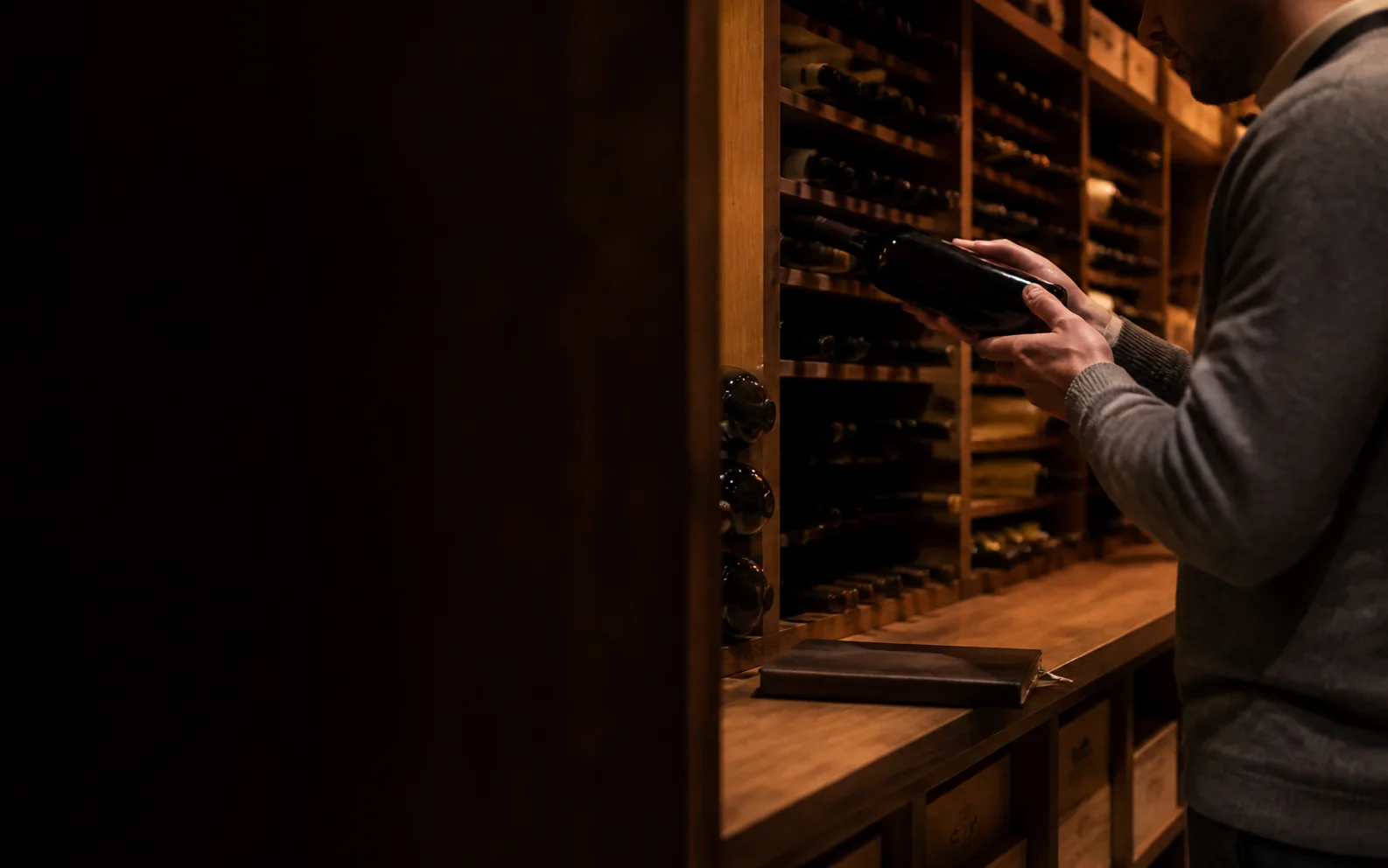
Optimal storage conditions are crucial for preserving Champagne's effervescence and overall quality. The Comité Champagne recommends storing bottles upright or on their sides. The place should be cool, at a constant temperature of between 10 and 15°C. High and constant humidity, between 60% and 80%, is also advised. Furthermore, bottles should be protected from light, vibrations, and odors. The storage area must be well ventilated, the Comité Champagne states. When these conditions are met, your Champagne "will keep its attributes for a long time," according to the Comité Champagne.
Storing wine in a stable environment minimizes evaporation through the cork. That limits the increase in ullage and reduces the wine's exposure to oxygen. Wines kept at ambient humidity levels and in temperatures between 10-15°C (50-59°F) evaporate and diffuse more slowly than wine kept in lesser conditions. They will thus have lower ullage levels. The position of the barrel can affect the speed and degree of evaporation, and the need for topping up. Aeration and evaporation occur more quickly if the bung hole is on top. This specifically refers to barrels. The principle of minimizing air exposure applies to bottles as well. For more details on maintaining ideal conditions, explore our guide on how to store wine.
How do ullage levels indicate a Champagne's condition?
Ullage, or fill level, refers to the space at the top of a wine bottle. That space is not occupied by wine, according to WineBid: wine auction terminology. During the bottling process, most wineries aim for an initial ullage level of between 0.2-0.4 inches (5-10mm). A lower ullage can indicate seepage and oxidation of the wine. That sharply affects its value, WineBid: wine auction terminology explains. Generally, greater ullage suggests the wine may have been exposed to harmful levels of oxidation. That is why auction houses and retailers of mature wines closely inspect ullage levels. They use the reading to judge potential quality and resale value. If you're considering acquiring older bottles, understanding these condition indicators is crucial. Learn more about buying wine at auction.
A cork is not a completely airtight sealant. Some wine is lost through evaporation and diffusion over time. That increases the amount of ullage. Champagne bottles have a distinct shape. Ullage guides are typically provided for different bottle types, such as Bordeaux and Burgundy, because their forms vary. For example, WineBid: wine auction terminology provides specific ullage terms for Bordeaux, Cabernet Sauvignon, and similar bottles. It does the same for Burgundy, Pinot Noir, and similar bottles, measured in centimeters for the latter. Understanding these distinctions is vital when assessing the condition of older bottles. You can learn more about assessing fill levels in our guide to wine ullage levels explained.
How long can you store Champagne?
When you purchase Champagne, it has already undergone an aging period. It has spent at least 15 months in the cellars of the Champagne Grower or House that created it. That makes it ready for enjoyment, the Comité Champagne notes. For vintage Champagne, a minimum of three years of maturation is required. For non-vintage Champagne, producers often blend wine from older vintages, sometimes as high as 40%. That ensures a consistent style. However, if you follow the recommended storage conditions, you can keep Champagne for "several more years," and it "will keep its attributes for a long time," the Comité Champagne states.
Historical examples demonstrate Champagne's remarkable longevity under ideal conditions. In 2009, a bottle of 1825 Perrier-Jouët Champagne was opened and found to be drinkable. Guinness World Records officially recognized it as the oldest bottle of Champagne in the world at that time. Furthermore, in 2010, 168 bottles of Champagne were discovered in a Baltic Sea shipwreck. They included bottles from Veuve Clicquot and the defunct house Juglar, dated between 1800 and 1830. Experts described their contents as being in "very good condition." These discoveries highlight the potential for exceptional aging when Champagne is stored in stable, cool environments. They also underscore its potential as a fine wine investment. To find the Champagnes in your collection that are ready now, see the wines entering their drinking window.
What happens to the taste and aroma of aged Champagne?
As Champagne ages, particularly under optimal storage conditions, its flavor profile can evolve significantly. The 1825 Perrier-Jouët, for instance, was described as drinkable with distinct notes of truffles and caramel. Chemical analyses of 170-year-old Champagne from a Baltic Sea shipwreck revealed a composition similar to modern Champagne. The old wine contained "much more sugar" and was "less alcoholic." It also had "higher concentrations of minerals such as iron, copper, and table salt" compared to contemporary Champagne. This reflects historical tastes. People in the 19th century commonly added sugar to their wine at dinner.
The dosage is a blend of sugar and wine added after disgorgement. It plays a role in this evolution. It adjusts sweetness, and it protects Champagne from oxidation. A small amount of SO2 and sugar acts as a preservative. Benoît Gouez, cellar master of Moët & Chandon, states that sugar helps Champagne recover from the oxidative shock of disgorgement. It also contributes to its aging potential. The cork itself also offers clues to a Champagne's age post-disgorgement. The longer it has been in the bottle, the less it returns to its original cylinder shape. This complex interplay of factors allows older Champagnes to develop unique and often highly prized characteristics. They move beyond fresh fruit notes to more tertiary aromas.
To make informed decisions about holding or selling your fine wines, including Champagne, stay ahead of market trends. Explore our fine wine market index for the latest insights and data.