

Rose Champagne: What to Do Next With Your Bottles
Updated
On this page
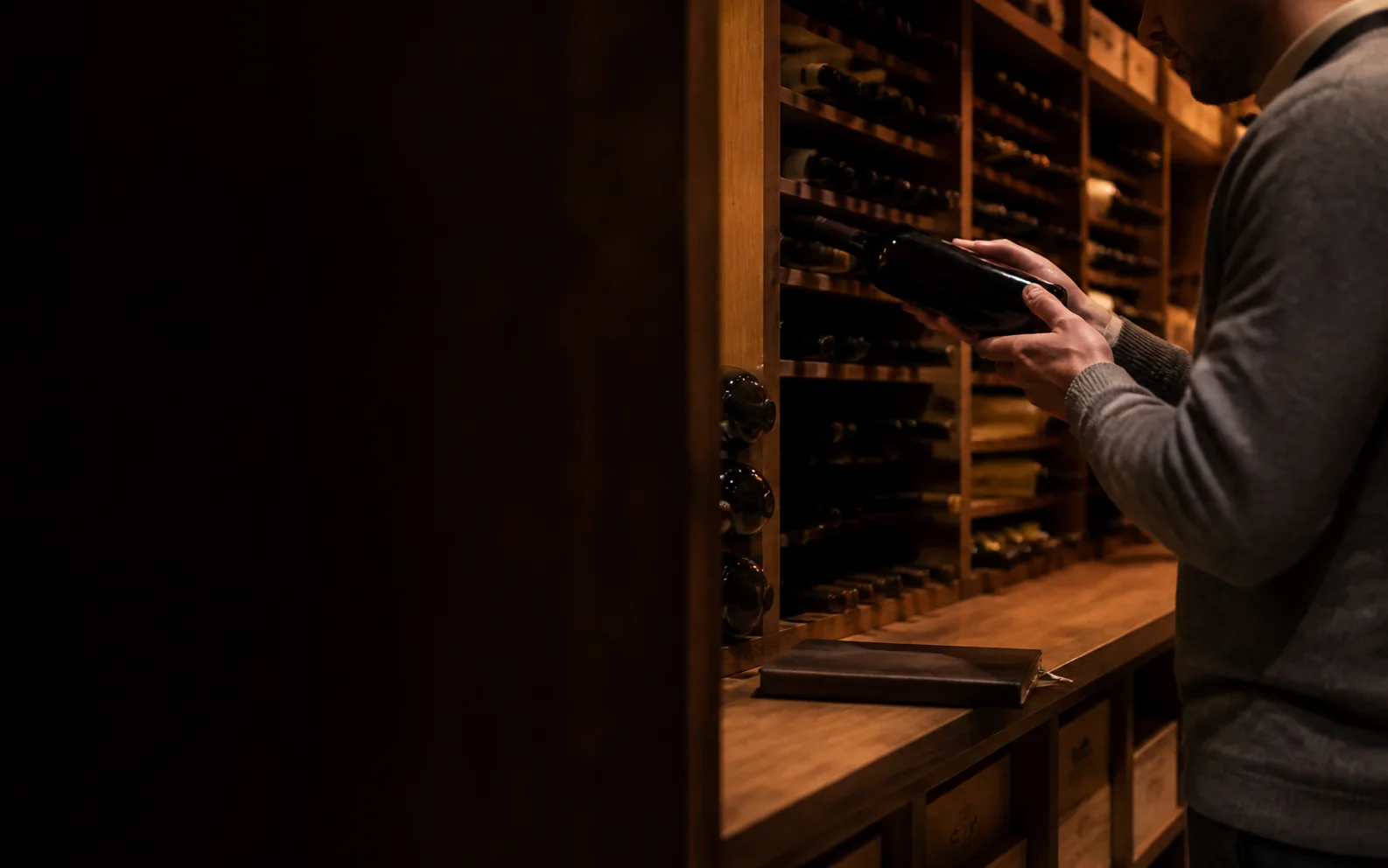
Your rose champagne has already spent at least 15 months aging in the cellars of its grower or house, so it is ready to be enjoyed. You can keep it for several more years if you follow specific storage guidelines, according to Comité Champagne. To preserve its attributes, store bottles upright or on their sides in a cool place, maintaining a constant temperature between 10 and 15°C. Humidity should be high and constant, between 60% and 80%. Protect the bottles from light, vibrations, and odors in a well-ventilated space, as advised by Comité Champagne. When you decide to serve it, chill the bottle to an ideal temperature of 8-10°C. Use a tall, bulbous glass with a narrow top to fully appreciate its finesse and aromas. Rose champagne has a history dating back to the late 18th century. Both Rinault and Veuve Clicquot claim to have shipped the first bottles.
How is rose champagne made, and what grapes are used?
Rose champagne comes from one of two methods: the saignée method or the d'assemblage method. Using the saignée method, winemakers leave the clear juice of dark grapes to macerate with the skins for a brief period. This process results in wine that is lightly colored and flavored by the skins. The d'assemblage method, which is more common, involves producers blending a small amount of still red wine into a sparkling wine cuvée. This approach allows winemakers to achieve a predictable and reproducible color, ensuring a consistent rosé appearance from year to year.
The grapes used to produce almost all champagne include Pinot noir, Pinot meunier, and Chardonnay. Small amounts of other varieties, such as Pinot blanc, Pinot gris (known as Fromenteau in Champagne), Arbane, Chardonnay rosé, and Petit Meslier, are also vinified. The designation Blanc de Blancs indicates that the champagne is made exclusively from white grape varieties, primarily Chardonnay, according to Comité Champagne. Conversely, a Blanc de Noirs is made solely from red grape varieties, which can be Pinot Noir, Meunier, or a blend of the two.
Pinot noir and Pinot meunier contribute length and backbone to the wine. They grow predominantly in the Montagne de Reims and the Vallée de la Marne districts. Chardonnay provides acidity and a biscuit flavor. It grows mostly in the Côte des Blancs, a north-south-running strip south of Épernay. These distinct terroirs contribute to the varying grape characteristics. That explains why each Champagne house blends juice from different grape varieties and geographical areas within Champagne to achieve its desired style. You can learn more about the process of making rosé wine on our how-is-rose-wine-made guide.
What are the different sweetness levels of champagne?
The dosage liqueur, added just after disgorgement, determines the sweetness level of champagne. This blend is typically composed of cane sugar and wine, according to Comité Champagne. Caroline Latrive, cellar master of Ayala, describes dosage as the final touch in champagne making. She emphasizes that it must be as subtle as possible to achieve the right balance. Benoît Gouez, cellar master of Moët & Chandon, adds that sugar helps champagne recover from the oxidative shock of disgorgement and contributes to the wine's aging potential.
The classification of champagne wines based on their sugar levels is as follows:
| Classification | Sugar per litre (grams) |
|---|---|
| Extra Brut | Less than 6 |
| Brut | Less than 12 |
| Extra Dry | Between 12 and 17 |
| Sec | Between 17 and 32 |
| Demi-sec | Between 32 and 50 |
| Doux | More than 50 |
Wines labeled Brut Zero are more common among smaller producers. They have no added sugar and typically contain less than three grams of residual sugar per litre in the finished wine. Today, Brut is the most common style. Historically, however, champagne was considerably sweeter throughout the 19th century and into the early 20th century, often consumed as a dessert wine rather than with meals. During this period, champagne sweetness was sometimes referred to by destination country: Goût anglais (between 22 and 66 grams), Goût américain (between 110 and 165 grams), Goût français (between 165 and 200 grams), and Goût russe (between 200 and 300 grams).
How do bottle size and age affect champagne?
Champagne is primarily fermented in two bottle sizes: standard 750-millilitre bottles and 1.5-litre magnums. Magnums are often considered to yield higher quality wine, thanks to a lower oxygen content and a more favorable volume-to-surface-area ratio for bubble formation. There is no hard evidence to support this view. Other bottle sizes, frequently named after Biblical figures, are typically filled with champagne that has already undergone fermentation in standard bottles or magnums. Gosset, however, bottles its Grande Réserve in Jeroboams from the start of its second fermentation. Sizes larger than a Jeroboam (3 litres) are rare. The House Drappier offers Primat (27 litres) and Melchizedek (30 litres) bottles exclusively.
When you acquire a bottle of champagne, it has already undergone an aging process of at least 15 months in the cellars of the Champagne Grower or House that produced it. That makes it ready for enjoyment, states Comité Champagne. For vintage champagne, which is made entirely from grapes of an exceptional harvest year, a minimum of three years of maturation is required. The aging of champagne after disgorgement can be inferred from its cork: the longer it has remained in the bottle, the less the cork will return to its original cylindrical shape.
Historical examples highlight champagne's aging potential. Guinness World Records recognizes an 1825 Perrier-Jouët Champagne as the oldest bottle of champagne in the world. It was opened in 2009 and found to be drinkable, with notes of truffles and caramel in its taste. In 2010, 168 bottles from a shipwreck dating between 1800 and 1830 were discovered. Chemical analyses in 2015 covered these 170-year-old champagnes, from houses such as Veuve Clicquot, Juglar, and Heidsieck. They contained more sugar and were less alcoholic than modern champagne, alongside higher concentrations of minerals like iron, copper, and table salt. Proper wine storage is key to preserving these characteristics.
What are prestige cuvées and notable producers?
A cuvée de prestige is a proprietary blended wine, typically a champagne, that a producer considers to be the pinnacle of their range. These wines often represent the highest standards of production and are priced accordingly.
Notable examples of prestige cuvées include Louis Roederer's Cristal, Laurent-Perrier's Grand Siècle, Moët & Chandon's Dom Pérignon, Duval-Leroy's Cuvée Femme, Armand de Brignac Gold Brut, and Pol Roger's Cuvée Sir Winston Churchill. Moët & Chandon's Dom Pérignon, launched in 1936 with the 1921 vintage, was arguably the first publicly available prestige cuvée. Louis Roederer's Cristal, though produced since 1876 for the private consumption of the Russian tsar, became publicly available with its 1945 vintage. Other early prestige cuvées include Taittinger's Comtes de Champagne (first vintage 1952), Laurent-Perrier's Grand Siècle 'La Cuvée' (a 1960 blend of the 1952, 1953, and 1955 vintages), and Perrier Jouët's La Belle Époque. Many Champagne houses have since followed suit. They often name their prestige cuvées after significant figures connected to the producer and present them in distinctive bottle shapes, following the lead of Dom Pérignon's 18th-century revival design.
Here is a selection of Champagne houses and their respective prestige cuvées:
| House | Founding Year | Cuvée de prestige |
|---|---|---|
| Ayala | 1860 | Grande Cuvée |
| Billecart-Salmon | 1818 | Grande Cuvée |
| Bollinger | 1829 | Vieilles Vignes Françaises, La Grande Année, R. D. |
| Charles Heidsieck | 1851 | Blanc des Millénaires |
| Drappier | 1808 | Grande Sendrée |
| Duval-Leroy | 1859 | Femme de Champagne |
| Gosset | 1584 | Celebris |
| Henriot | 1808 | Cuvée des Enchanteleurs |
| Krug | 1843 | Name defined annually, Clos du Mesnil, Clos d'Ambonnay |
| Laurent-Perrier | 1812 | Grand Siècle "La Cuvée" |
| Moët & Chandon | 1743 | Dom Pérignon |
| Perrier-Jouët | 1811 | Belle Époque |
| Philipponnat | 1910 | Clos des Goisses |
| Pol Roger | 1849 | Winston Churchill |
| Louis Rœderer | 1776 | Cristal |
| Ruinart | 1729 | Dom Ruinart |
| Salon | 1921 | S |
| Taittinger | 1734 | Comtes de Champagne |
| Veuve Clicquot Ponsardin | 1772 | La Grande Dame |
How should you serve and open rose champagne?
Serve champagne chilled to fully appreciate its finesse and aromas. The ideal drinking temperature is between 8-10°C, according to Comité Champagne, or 7-9°C. To achieve this, place the bottle in an ice bucket half-filled with water and ice for 20 to 30 minutes before serving. Alternatively, leave it in the bottom of your refrigerator for a few hours.
Regarding glassware, while flutes or coupes are often used, Comité Champagne suggests that these shapes are not best suited to expressing champagne's full character. Instead, choose a tall, bulbous glass with a narrow top, shaped like a tulip, to allow the champagne to deploy all its aromas and fine bubbles. When holding a flute or tulip glass, etiquette dictates grasping the long, narrow stem. That avoids smudging the glass and warming the contents with your hand. For a coupe glass, with its short stem and wide bowl, holding it by the bowl is the only practical option.
To open a bottle of champagne safely and without spillage, Comité Champagne recommends removing the muselet (wire cage) and foil cap while keeping a firm grip on the cork. Then, still holding the cork firmly, grasp the bottle's body and rotate it gently, easing the cork out of the neck without letting it escape. This method, as opposed to pulling the cork, helps prevent it from flying out at speed. It also lets air into the bottle, which can prevent geysering. While sabering a champagne bottle can be a ceremonial act, it is risky and potentially dangerous, Comité Champagne warns. If attempting sabrage, protect the hand holding the bottle, ensure the champagne is very cold, and strike the "welding line" on the neck with a quick, sharp blow.
When pouring, do so in two stages. Start with a small quantity to allow the wine to aerate and release its aromas. Then fill the glass slowly and regularly to two-thirds full, advises Comité Champagne. A study by scientists from the University of Reims, cited, compared two pouring styles. Tilting the glass and gently sliding the liquid along the side preserves more bubbles than pouring directly down to create a head of "mousse." Colder bottle temperatures also contribute to reduced gas loss.
After enjoying your champagne, the way you wash the glasses is important. Comité Champagne advises washing them by hand in hot water, without using detergent, as detergent can prevent the formation of elegant bubbles. Dry them by hand. If you have an unfinished bottle, seal it using a stopper cap specifically designed for sparkling wines. Place it in a cool place, either upright or on its side. However, an opened bottle will not keep for long. The notion that placing a spoon in the neck of an open bottle will preserve its bubbles is not true, Comité Champagne states.
What is the current market situation for champagne?
The Champagne industry anticipates selling 314 million bottles in 2023. That represents a 3.7% decrease from the previous year, according to the Comité Champagne industry trade group, as reported by Bloomberg News. While nightclub markets show continued strength, consumption of champagne in the home is experiencing a decline.
In 2023, total champagne shipments reached 325.5 million bottles, with a value of 6.8 billion EUR, according to Comité Champagne data cited. France accounted for 42.5% of the volume and 34% of the value, while exports made up 57.5% of the volume and 66% of the value.
The top ten external markets for champagne by volume and value are detailed below:
| No. | Country | Volume (million bottles) | Value (million EUR) |
|---|---|---|---|
| 1 | United States | 34.1 | 793.5 |
| 2 | United Kingdom | 29.9 | 503.6 |
| 3 | Japan | 13.8 | 354.5 |
| 4 | Germany | 11.1 | 201.9 |
| 5 | Belgium | 10.3 | 200.1 |
| 6 | Australia | 9.9 | 166.9 |
| 7 | Italy | 9.2 | 159.9 |
| 8 | Switzerland | 6.1 | 125.6 |
| 9 | Spain | 4.4 | 94.0 |
| 10 | Netherlands | 3.9 | 79.7 |
Several general factors influence the price of champagne. They include the limited land available in the Champagne region, the worldwide prestige the wine has cultivated, and the high cost associated with its production process, Forbes notes. Understanding these dynamics can help you navigate the fine wine market index and make informed decisions about your collection.
To stay ahead of market movements and identify optimal buying or selling opportunities for your collection, set up price alerts on your watchlist.